
Eight years old, she stood there, in front of my table and laptop, trembling. She had beautiful brown eyes, straight brown hair parted in the middle, and a slight smile, perhaps masking the cruel memories that it had taken to get here with her mom from Guatemala. Her name was Marisol. Her mother, Maria, sat next to her, dandling a baby sister on her knee. Mom’s stoic visage belied her fear and tension. Patiently, they waited for me to complete the intake process at the Casa Alitas Migrant Welcome Center in Tucson, AZ so she, her mom, and baby sister could join the line for a hot meal, maybe rest on one of the many cots, and start thinking about traveling to Idaho to join family members.
How much had they had to endure to make it here to Arizona? Would I have been able to do the same at her age? I doubt it. But I won’t forget the day—February 12th—because according to her nine-digit “alien” registration form provided by the Border Patrol, today was her birthday. The realization hit me like a gut punch. I felt so sad and wished I could say something more than “feliz cumpleaños,” or had something to give her as a present.
Resilience? We hardly know thee.
I tried to reassure them, trying to help them feel welcomed.
“Bienvenidos a Los Estados Unidos. Somos sus amigos. Estoy aqui para ayudarte. Por favor, no te preocupes” (Welcome to the U.S. We are your friends. I am here to help you. Please, don’t worry.)
She and her mother answered my basic questions on the intake form: “Como se llama? Cuántos años tienes? De donde eres?” (What is your name? How old are you? Where are you from?). All the while, they waited patiently, but with eyes darting around the large hall, taking it all in and perhaps wondering where all these other people had come from.
None of us humanitarians can imagine how bad your life must be to walk 2,000 miles with your children to escape the horrors of gang violence, intimidation, or extortion. Where was the dad? Siblings? You don’t ask because you don’t want to resurrect the trauma.
After years of reading about all the people—mainly women, children and teenaged boys–dying out in the Sonoran Desert trying to escape violence, extortion, gang killings, corrupt governments, and the deleterious impacts of NAFTA, I knew I had to do something. Ten years ago, I started taking water out to the desert because fleeing to safety should not be a death sentence. Then, I started working the intake desk at the migrant support center, assisting people like Marisol and her mom who spent 2-3 weeks in jail while waiting to pass their asylum claim interview. Some days, we would have over 600 people dropped off by Border Patrol from countries all over the globe—Cuba, Ecuador, Peru, Vietnam, Chile, Guatemala, Honduras. Everyone gets entered in our system so that if their paperwork is ever lost, we have information about the relatives with whom they are trying to join, phone numbers and basic demographic data. Everyone, even children, get an “A” number which replaces any identification documents they once had, largely because Border Patrol throws away their documents along with all their medications and most personal effects. All they have is contained in a one-gallon Ziplock bag.
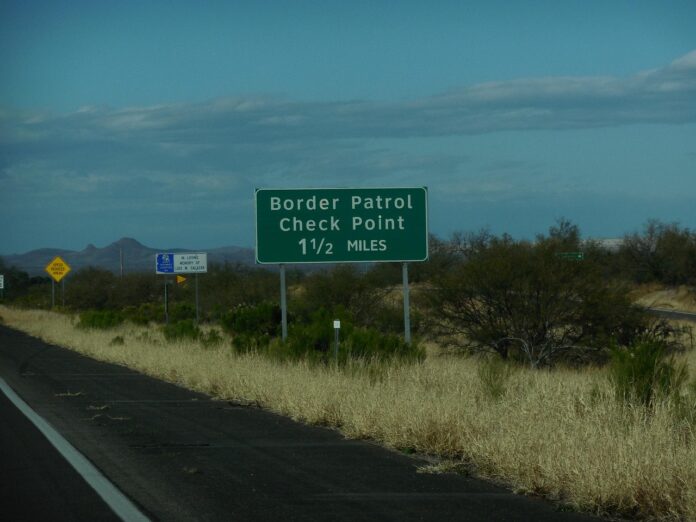
It doesn’t take long to realize that our national policy of “prevention through deterrence” has created a humanitarian crisis on the border. Operation Blockade, Operation Gatekeeper, Operation Hold the Line, and other policies have driven people who are refugees from trauma and violence to seek safety by forcing them to cross through some of the most dangerous, inhospitable terrain in North America. Arizona is ground zero in this humanitarian crisis. It’s a crisis so bad that it has attracted the attention of Doctors Without Borders.
The US border wall—just a collection of unconnected barricades—was built first in areas that were easiest to cross. That didn’t dissuade people from coming; it only pushed them into harsher, more deadly terrain. None of the obstacles—walls, surveillance, prolonged and inhumane detention, family separation, laws criminalizing migration and human smuggling—deterred people from crossing into the U.S. Yet the official thinking was that the more deadly the crossing, and the more hostile the treatment upon being detained, then the fewer people would try to come, having heard what horrors awaited them. It didn’t and doesn’t work. You leave home because home is the mouth of a shark. People have kept coming.
Because of our history of imperialism and world domination, the U.S. has had a hand in practically every foreign crisis that has forced people to leave their homes, seeking a better, safer life. The longer we wait to accept responsibility for this, the more painful it will be for us as a nation to atone for the human cost of our global empire.
Meanwhile, more than 4,400 people have perished in Arizona’s deserts since 2000 (on average, human remains are found every two days). Those are just the ones we know about. Many more die from exposure and dehydration, but their remains are never found. The lucky ones make it, like Marisol and her mother and baby sister, but they are scarred for life by the experience. But let me tell you about something that statistics can’t capture: the ache in the desert air, in the earth, in the whole ecosystem when someone dies alone, thirsty and afraid—just miles from help that never arrived.
For those who don’t make it, their deaths are horrific, a torture appalling yet all too commonplace. Even more gruesome is their dismemberment and decomposition after death. In just a few hours in the desert sun, the corpse swells and bloats, and the body’s skin blackens like grilled meat on a barbeque. The soft tissues and eyes are the first to go. Coyotes, fox, and eagles rend skin, rip clothes, tear at intestines, and scatter bones. Quickly, the flies, beetles and maggots go to work. Scavengers like vultures descend on the rest. In only 24 hours, eight vultures can completely skeletonize a human body. All that remains are some strips of clothing, maybe the carpet shoes worn to elude trackers, a day pack with a flip phone, toothbrush, a comb, photos of loved ones, an identification card.
Those like Maria, Marisol and her baby sister who make it are lucky given the odds against them. Yet they carried on and kept trying during their long migration ordeal, hoping to eventually join family and friends in new towns, only to work at jobs most of us wouldn’t consider for wages far below the minimum wage, building a new life, returning to school, redefining their existence in a foreign culture that vilifies them as criminals, lazy, and very bad people who eat your pets.
Marisol will have to start school, learn a new language, endure discrimination, and taunts, trying to make friends wherever she ends up. And trying to forget watching her mother being raped by “coyotes” and cartel gangs, stealing her baby formula, taking her last pesos, seizing her rosary and jewelry. Many women get “the pill” before heading north to avoid unwanted pregnancies. We cannot even imagine the horrors of migration.
Every morning I start screaming when I hear the news. Why does the Trump administration make it so hard to be a fulfilled, rights-bearing human being? The travesties, the insults, the assaults on the institutions of the country appall me. Legal residents of the country sent to foreign prisons without due process. Students detained or arrested after voicing their opposition to U.S. policies and then sent to prisons in Louisiana. Federal judges threatened with impeachment for ruling against Trump’s violations of the constitution and due process. Government civil servants fired without cause after years of service. Military leadership eviscerated and replaced with greenhorn lackeys. Deportations, blatant racism, humiliation of foreign leaders, kidnappings, workplace raids, intimidation of the media, defunding the safety net of programs for the poor and chronically ill, increased funding for the military and immigration police. Voices of compassion are being drowned out by the voices of hate.
As cruel as these past policies have been, the current U.S. regime has descended to new levels of cruelty never seen here before. Asylum claims are no longer honored. Human rights violated. Due process nixed. Search and seizure laws ignored. Deportations increased. Churches and other sanctuaries violated in the search for undocumented migrants. Businesses raided.
Despite the Trump administration’s claims that the border is closed, in July 2025, more than 11,000 apprehensions were recorded by the Border Patrol, and 12 deaths recorded by the Pima County Medical Examiner.
As humanitarian volunteers, we refuse to be silenced or intimidated. So, we go to Federal court to stand in silent protest as “witnesses” to the deportations. We organize community response teams to confront masked men trying to arrest our neighbors. We monitor ICE agents patrolling schools and churches. We erect crosses at death sites to pay tribute to those who died enroute. We maintain our Humane Borders website’s “death map” to hammer home the appalling reality that Arizona is a land of open graves. And we keep delivering water to the desert based on a simple belief that food and water are a universal human right. It is not conditional on being good or bad, rich or poor, left or right. We do not ask what religion you belong to. Instead, we ask how much water and food you would like. As Gloria Anzaldua observed, the border is “una herida abierta” (an open wound) where the Third World grates against the First and bleeds.
For me, and all the other humanitarian volunteers on the border, our work is not drudgery. While our tasks may seem like a hopeless Sisyphean routine, we are convinced that one day the U.S. will again welcome strangers to our borders (“your tired, your poor, your huddled masses, yearning to be free”) rather than killing them because we can. We demand that the U.S. stop using the desert to do this killing, obscuring our national complicity in creating a necropolis of open graves. It’s barbaric, inhumane, and vicious. No matter what we do as humanitarians, the desert will never be safe. The borderlands of Arizona are a vague and undetermined place created by the emotional residue of an unnatural boundary that is in a constant state of transition. The prohibited and forbidden are its inhabitants.
As a nation, we will be better than this…someday. The notion that the wall is a barrier is an illusion, as any border volunteer can tell you. Walls don’t even begin to address the issues of human migration, but they do exacerbate human suffering and misery. Walls won’t keep them from coming. Nothing will. For those of us at Humane Borders, hope knows no borders.
But today what I really wonder about is Marisol, her mother and baby sister. How did they fare after they left Casa Alitas? Resilience, we hardly know thee.
***
***
The ManifestStation publishes content on various social media platforms many have sworn off. We do so for one reason: our understanding of the power of words. Our content is about what it means to be human, to be flawed, to be empathetic. In refusing to silence our writers on any platform, we also refuse to give in to those who would create an echo chamber of division, derision, and hate. Continue to follow us where you feel most comfortable, and we will continue to put the writing we believe in into the world.
***
Our friends at Corporeal Writing are reinventing the writing workshop one body at a time.
Check out their current online labs, and tell them we sent you!
***
Inaction is not an option,
Silence is not a response
Check out our Resources and Readings

